Bahamas Strikers Air Truce Terms | new York Times Article
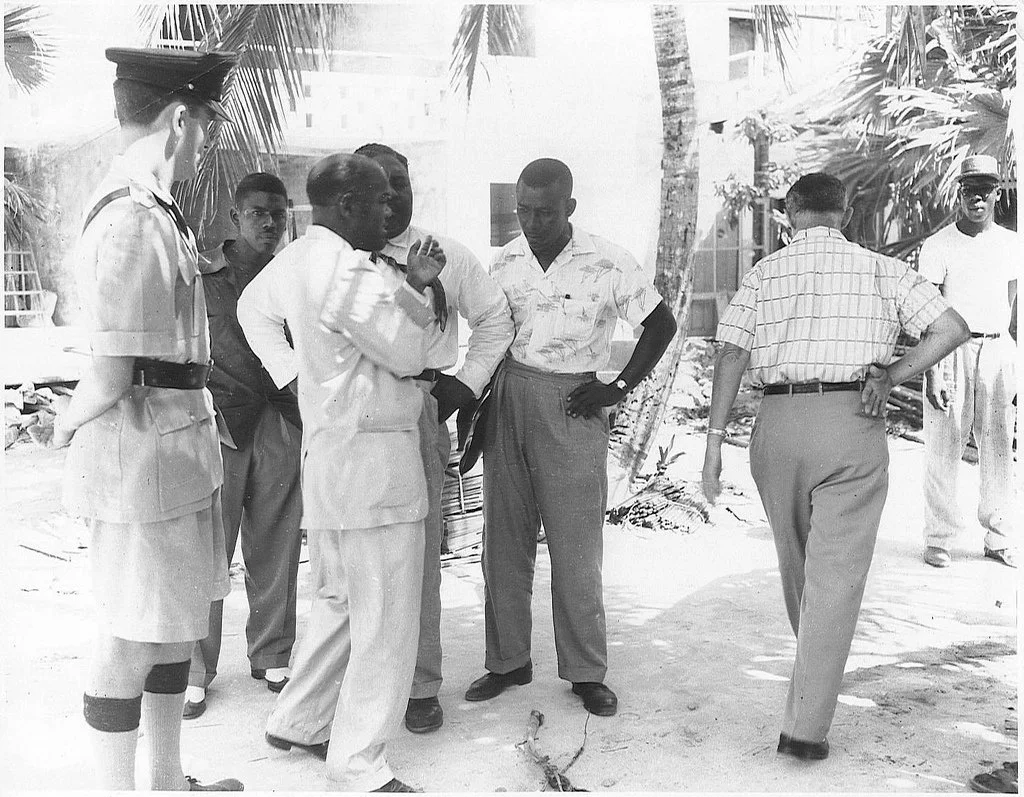
BAHAMA STRIKERS AIR TRUCE TERMS
By HOMER BIGART
Special to The New York Times.
Published January 18th, 1958
NASSAU, the Bahamas, Jan. 17—New proposals have been submitted by Negro labor leaders to end the general strike, which is costing this British resort colony $110,000 a day by keeping the hotels closed.
But the proposals certainly will be rejected, sources close to Governor Sir Oswald Raynor Arthur said today.
The proposals contained an offer to renew negotiations in the taxi dispute that set off the colony's first mass walkout of Negro workers. The offer, however, was coupled with these demands:
The Governor must appoint a new tribunal to negotiate the taxi strike, and the chairman of the tribunal must be "someone who has never lived in the Bahamas."
Hotel owners must recognize the right of hotel employees to form free unions.
Taxi Strike the Beginning
The taxi drivers struck last week in protest against a plan of the big hotels to provide free transportation from Nassau airfield. Hotel employees walked out in sympathy and the general strike followed.
Acceptance of the double demand would represent a backdown by the Government. Governor Arthur had named a tribunal the taxi union refused to recognize. The so-called Bay Street group, wealthy merchants who are the dominant power in the colony, has cautioned the Governor to abide by his original selection.
Again, it is difficult to see how the Government could insist on recognition of a hotel employees union when the organization of these workers is specifically barred by the colony's Trade Unions Act of 1942.
Thus, the prospect of an early settlement seemed as dim as ever. The Bay Street merchants were counting on an early break in the strikers' solidarity. Some predicted that the strike would be broken by the middle of next week. They doubted that The Bahamas Federation of Labor could have amassed much of a strike fund and expressed the opinion that empty stomachs would soon force the strikers to return to work.
Randol Fawkes, 33-year-old president of the Labor federation, said the strike would continue. "We've gone too far now to back down," he said. "Unless we get our rights we will strike until kingdom come."
From his small office above a service station, Mr. Fawkes dispatched a motorcade of 200 taxis jammed with strikers through the shopping district. With horns blaring, the strikers drove past the empty hotels and through the almost deserted shopping district without police interference.
For all this noisy demonstration, the day passed without violence. The Government reported only one act of intimidation. Last night, it reported, an automobile filled with Negroes drove up to a gasoline station on the outskirts of Nassau and told the owner to shut down immediately or have his place blown up. He shut down.
Meanwhile, the position of the "Bay Street Oligarchy" was outlined by Stafford L. Sands, regarded as one of the most influential persons in the colony. Mr. Sands is a lawyer and a member of the Colonial Assembly. He also is the chairman of the Development Board, which promotes the tourist industry. He comes from an old-line Bahamas family. His ancestors settled here in 1649.
Mr. Sands said that the Negroes of the Bahamas, who comprise 85 per cent of the resident population of 98,000, were "much better off" than Negroes living in the South of the United States. Yesterday, Henry M. Taylor, chairman of the Progressive Liberal party, which is backing the strike, had contended precisely the opposite.
Although hotel managers took a gloomier view, Mr. Sands said, that the normal flow of tourists might be restored by March if the walkout ended by Feb. 1. He estimated that the strike was costing $110,000 a day.