What Labour Wants
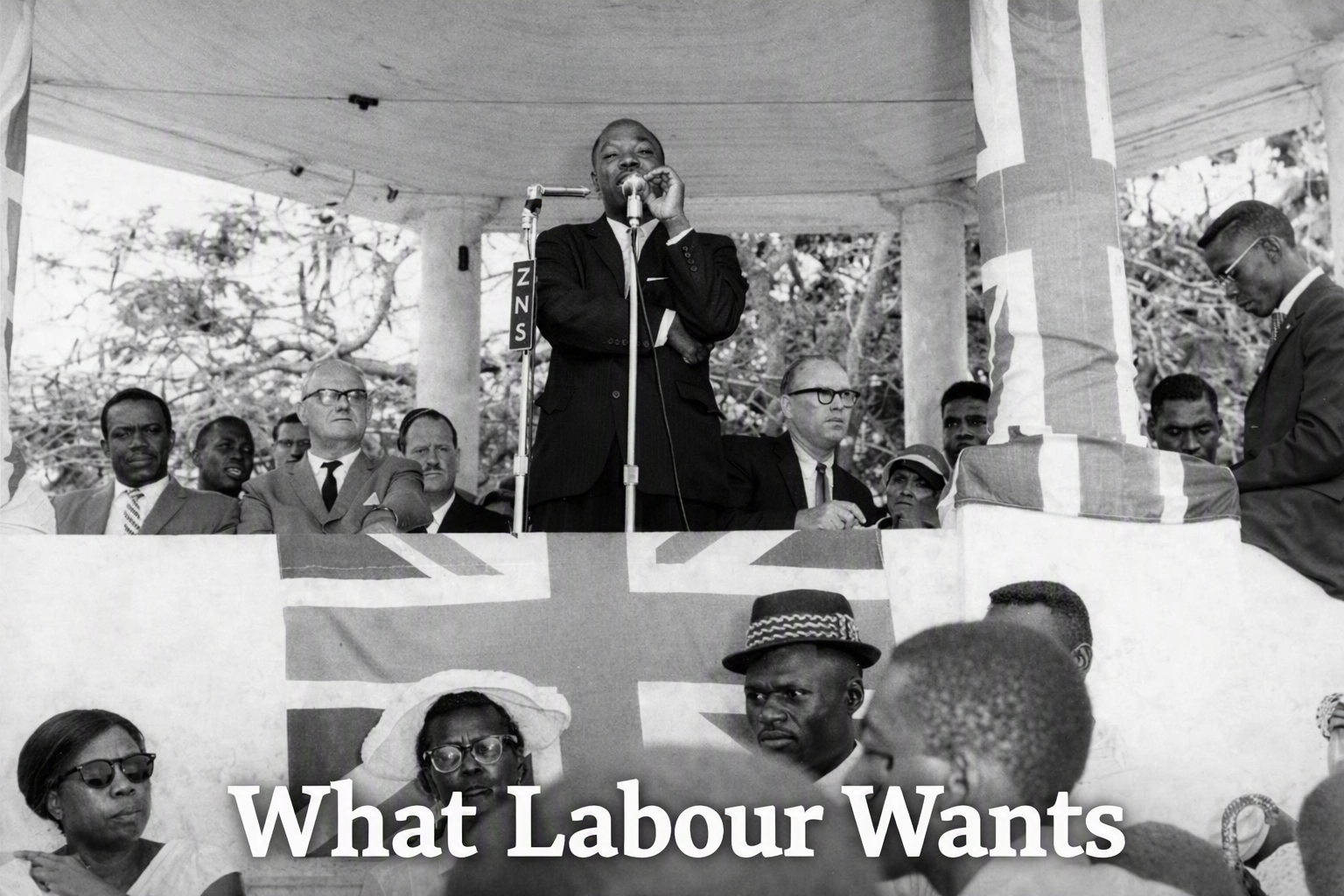
WHAT LABOUR WANTS
MAY 7TH, 1955
The Nassau Herald
The working men and women are the foundation of any society. Just as the strength of a building depends on the structure and depth of its foundation, so does the strength of a community depend on the organisation of its workers. It follows that if the foundation is weak or the organisation poor, neither can survive a sudden change in the atmospheric or economic conditions.
Bahamian labour has never been properly organized and as a result there is no end to employer-employee disputes in all large undertakings. The Emerald Beach dispute, the Boat-men's Puzzle, unfair competition between local and foreign mechanics
all are part of a pattern made possible by the lack of organisation among the toiling thousands.
The Bahamas is on the eve of one of the greatest economic periods it has ever known. The Coral Harbour Project, the million-dollar development at Paradise Beach, the Industrial Center at Grand Bahama coupled with the establishment of a Free Port – all these portend progress. Industry, Commerce and Banking – these are not mere abstractions; these are activities of men. They create relations between human beings. They influence character and human ideas. They are forces modelling and reshaping the society in which we live.
In such a social atmosphere the labourers – skilled and unskilled – will assume increased importance. Our workers will struggle for a higher standard of living and more leisure hours in healthier surroundings. They will strive to better their conditions of work through their own representatives. They will try to emancipate themselves from the strangle hold of small wages which are a mockery of their dreams of respectable living. Even the project labourer when they return will be imbued with a fresh concept of liberty.
How will this new spirit reconcile itself with Labour's present restricted condition? Can the general attitude of the Bahamian and foreign employer to the native remain that of benefactor extending charity to the poor? Must our working men still be treated like so many beggars who must be grateful for whatever alms they receive? Will the tone of management remain harsh, course and insulting? These conditions cannot continue. Both employer and employee need each other. The best meeting ground for these parties is around a bargaining table where labour is represented, not by men hand-picked by Government, but by persons of their own choice.
Does the Trade Union Act of 1943 alleviate some of the ills which now beset labour? No, not in its present form. This law was passed as a result of the Oakes Airfield Riot of the 1st June, 1942. The framers of this act must have been suffering from a colossal overdose of double talk. This law does not permit workers in our chief industry, "tourism", to organize to protect
themselves against the unfair practices of unscrupulous employers. By the denial of this basic freedom to domestic, agricultural and horticultural workers, the representatives of these people have deprived many of their constituents of a decent living and all that goes with it: a good education for their children, more food on the breakfast table, a pair of shoes on their feet, etc., etc.
With the exception mentioned above, Bahamian workers have the right to form unions for their mutual aid and protection. But suppose the employer interferes with the rights of his servants when he discovers that they are being organized. Suppose he fires the organizer. What then? The law is silent on this point. Suppose he "blacklists" the "trouble maker" as he calls him and instructs the other employers accordingly. Suppose the employer hires a "spy" to frustrate and destroy the union from within.
Suppose the employer says, "I'll keep you working here providing you sign an agreement not to join a union."
"And if I don't sign?" inquires the employee.
"Out you go," is the dictator's reply.
What does the law say in these cases? Nothing. Who muzzled the mouths of our representatives? How could they have allowed the cradle of liberty to be robbed? How can they expect you to vote for them again – only to be silent for another seven long years?
Now how can we correct these unfair practices of our employers? By the same fashion that the other countries adopted. By amending the law or by repealing this Bill of Rights and replacing it with a modern Bill of Rights for labourers everywhere.
What does Bahamian labour want? Nothing much. No more than what the ordinary man and woman wants. The labourer – skilled and unskilled – yearns for:
1. The right to a useful and remunerative job in the industries, shops, farms, offices and factories in this Colony.
2. The right to earn enough to provide food, clothing and recreation for himself and family.
3. The right of every farmer to raise and sell his products at a price which will give him and his family a decent living.
4. The right of every business man, large and small, to trade in an atmosphere that is free of unfair competition and stringent monopolies.
5. The right of every family to a decent home.
6. The right to adequate medical care and an opportunity to enjoy good health.
7. The right to expect from Government an insurance protection against the economic fears of old age, sickness, accident and unemployment.
8. The right to a good education.
9. The right to equality before the Bar of Justice.
All these rights spell SECURITY for Labour. Labour means ALL who work and whatever benefits Labour benefits everybody. With unity you can achieve a degree of security that your forefathers would never have dreamed was possible. Without unity, a former condition of slavery awaits you and your children.
Until next week, Good Luck!